R3 Deconstruction & Abatement Inc. | Serving Western Canada & Northwest Territories
Mold Removal in Edmonton, AB
Mold removal in Edmonton is not a surface cleaning job. When mold growth reaches walls, ceilings, insulation, or structural materials, professional mold remediation is required to eliminate the source and prevent recurrence. R3’s team of 40+ certified abatement technicians provides full-scope mold cleanup services for residential, commercial, and industrial properties across Edmonton and Western Canada, with 15+ years of hazardous material abatement experience behind every project.
Our Mold Removal and Remediation Services
Whether you are dealing with mold damage in a basement, black mold discovered behind drywall, or mold growth found during a renovation, R3 manages mold mitigation projects of every scale. Our team uses full containment, negative air pressure, and HEPA filtration to prevent cross-contamination during all mold eradication work.
Black Mold Removal
Black mold (Stachybotrys chartarum) is one of the most concerning mold species commonly found in water-damaged buildings and should always be handled by trained remediation professionals. R3's black mold remediation teams establish negative air pressure containment zones, perform complete removal of contaminated substrate, and conduct post-remediation air testing to confirm the space is clear. Attempting black mold cleanup without proper containment spreads spores throughout the building through air movement.
Basement and Crawl Space Mold
Basements and crawl spaces are the most common locations for mold growth in Edmonton homes due to humidity, poor ventilation, and seasonal moisture infiltration. R3 removes mold from concrete, wood framing, insulation, and drywall in below-grade spaces and restores affected materials to a clean, dry condition ready for reconstruction.
Attic Mold Removal
Attic mold is a frequent finding in Edmonton properties due to inadequate ventilation, ice damming, and roof leaks that go undetected for extended periods. Left untreated, mold in roof sheathing and attic framing can compromise structural integrity and spread into living areas. R3 removes attic mold and clears affected structural materials before moisture issues allow regrowth.
Mold Inspection and Testing
A thorough mold inspection before remediation identifies the full extent of growth, including mold concealed behind walls, under flooring, or in mechanical systems. R3 offers on-site testing for hazardous materials including mold and can identify other materials that may require professional abatement services during renovation or demolition projects.
Commercial Mold Abatement
Commercial mold abatement requires coordination around tenant occupancy, business continuity, and full regulatory documentation. R3 manages mold remediation services in commercial buildings, warehouses, multi-unit residential properties, and industrial facilities across Edmonton and Western Canada.
Mold Damage Restoration
Mold damage to drywall, insulation, wood framing, and flooring often requires complete removal of affected material in addition to surface treatment. R3 performs mold damage removal from all affected substrates, leaving the space in a clean, dry condition ready for your contractor to rebuild.
Where Is Mold Commonly Found in Edmonton Buildings?
Not all mold growth is immediately visible. In many cases, contamination develops behind walls, above ceilings, or beneath flooring long before property owners notice any signs. Understanding where mold commonly forms can help identify potential problem areas before they become more serious.
Edmonton’s freeze-thaw cycles, humidity fluctuations, roof leaks, and basement moisture problems can all create ideal conditions for mold growth if they are not addressed quickly. In Edmonton’s climate, mold growth is most often found in:
- Basements
- Crawl spaces
- Attics
- Bathrooms
- Laundry rooms
- Ceiling cavities after roof leaks
- Window frames
- Drywall behind leaks
- HVAC systems
- Insulation
If your property has experienced water damage, persistent humidity, or unexplained musty odours, a professional inspection can help determine whether hidden mold growth is present.
Mold remediation is just one part of our broader abatement services, which help property owners safely manage hazardous materials before renovations, demolition, or reconstruction projects begin.
Our Mold Remediation Process
Every mold problem is different, but successful remediation follows the same core principles: identify the source, contain the affected area, remove contaminated materials, and verify the environment is safe before re-occupancy. Here’s how our team approaches mold remediation projects across Edmonton:
Step 1: Mold Inspection and Assessment
Before any removal begins, our team inspects the affected area to identify the full extent of mold growth, including hidden growth behind surfaces. Bulk and air samples are collected for laboratory analysis to confirm mold type and concentration levels before mobilization.
Step 2: Containment
R3 establishes a sealed containment zone using heavy-gauge polyethylene sheeting, negative air pressure HEPA units, and entry and exit decontamination airlocks. Containment prevents mold spores from migrating to unaffected areas of the building during removal.
Step 3: Mold Removal and Cleaning
Contaminated materials are removed, double-bagged, and disposed of in compliance with Alberta regulations. All affected surfaces are treated using HEPA vacuuming and antimicrobial cleaning agents to eliminate residual spore contamination.
Step 4: Drying and Dehumidification
Following removal, industrial dehumidification and drying equipment reduces moisture levels in the affected area. Addressing the moisture source is critical to preventing mold from returning after remediation is complete.
Step 5: Post-Remediation Air Testing
Independent air quality testing after remediation confirms that mold spore levels have returned to or below normal background levels before containment is removed and the area is cleared for re-occupancy.
Experienced, Professional, and Trusted
Trusted Experts in Mold Remediation in Alberta and Western Canada
From small residential projects to large commercial remediation programs, our team follows proven containment, removal, and testing procedures designed to deliver safe, reliable results. We understand the urgency of mold-related issues and work efficiently to help clients return their properties to normal as quickly as possible.
Proud to be Canadian
Serving Western Canada for 15+ Years
Safety is our Standard - Quality is our Legacy
Built by teams that compete to raise the standard every day
Why Choose R3 for Mold Remediation in Edmonton
40+ Certified Technicians
Our professional mold removal team holds Alberta OHS certification and works to current remediation standards on every project
15+ Years of Abatement Experience
Serving Edmonton and Western Canada across residential, commercial, and industrial properties
OHS-Compliant on Every Project
All mold damage cleanup follows Alberta OHS protocols for containment and disposal
Completed Projects
0
+
Metric Tonnes of Recycled Materials
0
+
Number of Clients
0
+
Expert Solutions for Every Project
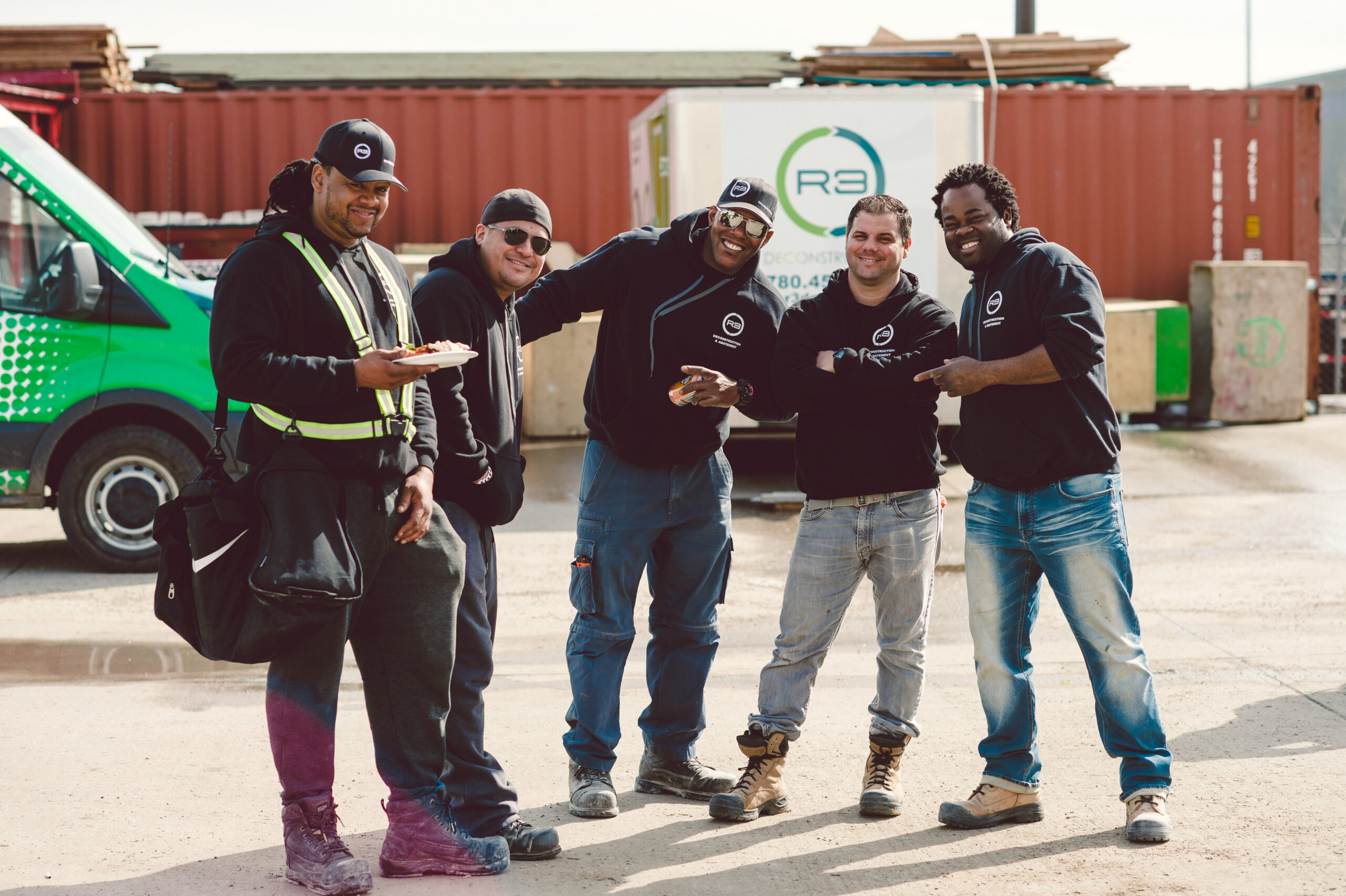
Whether you’re dealing with mold after water damage, a persistent musty smell, attic mold, basement contamination, or growth discovered during renovations, R3 can help. Our certified mold remediation team provides inspection, containment, removal, drying, and post-remediation testing for residential, commercial, and industrial properties across Alberta and Western Canada. Contact us today for an on-site assessment and detailed quote.
Frequently Asked Questions
Have questions about our process, safety standards, or services? We’ve gathered answers to the most common questions our clients ask before starting a project.
Professional mold remediation is necessary when mold growth covers more than roughly 10 square feet, when mold is present inside walls, under flooring, or in HVAC systems, or when the building occupant has respiratory conditions or a compromised immune system. Small isolated spots on non-porous surfaces like tile can sometimes be addressed with cleaning, but porous materials such as drywall, insulation, and wood framing cannot be cleaned and must be physically removed. Any mold that has returned after previous cleaning attempts is a sign the moisture source was not addressed, which requires a professional assessment. Contact R3 for an on-site mold inspection to determine whether your situation requires professional remediation.
Yes, mold can be fully eliminated from a building when a certified mold remediation team removes all contaminated material and addresses the moisture source that allowed mold to grow. Surface cleaning alone does not remove mold from porous materials; affected drywall, insulation, and wood framing must be physically removed and disposed of. Post-remediation air testing then confirms that mold spore levels have returned to normal background levels before the area is cleared for reconstruction. R3 handles mold removal and post-remediation clearance testing so you have documented confirmation the work is complete before any rebuilding begins.
Professional mold removal in Canada typically ranges from $1,000 to $3,500 for a contained residential area and can reach $10,000 to $30,000 or more for large-scale or whole-home remediation. The main cost factors are the size of the affected area, the materials involved (drywall and insulation cost more to remediate than hard surfaces), the extent of hidden growth behind walls or under floors, and whether structural materials require full removal and disposal. R3 provides quotes after an on-site assessment and can work with you on either a fixed-price or time and material basis so you know the full cost before any work begins.
The most common signs of mold are visible dark or discoloured patches on walls, ceilings, or floors, a persistent musty or earthy smell, and peeling or bubbling paint caused by moisture behind surfaces. Other signs include unexplained respiratory symptoms such as coughing or congestion that improve when you leave the building, water staining on ceilings or walls, and condensation on windows or cold surfaces during winter months. Mold is frequently hidden inside walls, under flooring, or in attic spaces and may not be visible at all. If you notice any of these signs, R3 can conduct an on-site mold inspection to identify whether mold is present and what removal is required.
Staying in a home with active mold growth is not recommended, particularly for anyone with respiratory conditions, allergies, or a compromised immune system. Mold releases spores into the air during normal conditions and especially when affected materials are disturbed. Black mold in particular can cause significant respiratory symptoms with prolonged exposure. If the mold is confined to a sealed, unoccupied space such as an attic or crawl space and the HVAC system is not affected, short-term occupancy may be manageable while remediation is arranged. If you are unsure whether your home is safe to occupy, R3 can assess the situation and advise on the right course of action.
For small mold spots on non-porous surfaces like tile or glass, careful DIY cleaning with appropriate protective equipment may be sufficient. For anything larger or involving porous materials, hiring a certified mold removal company is strongly recommended. Drywall, insulation, carpet, and wood framing cannot be effectively cleaned and must be physically removed. DIY attempts on larger mold problems frequently spread spores to unaffected areas of the building, worsening the contamination. Without post-remediation air testing there is also no way to confirm the mold has been fully eliminated. R3 can assess the scope of the problem and advise whether professional remediation is warranted before you invest time and risk making the situation worse.
Look for a mold remediation company with certified technicians, a clear containment and removal process, documented disposal procedures, and post-remediation air clearance testing included in the scope. The key questions to ask before hiring are: Are your technicians OHS-certified? Do you establish containment before removal begins? How is contaminated material disposed of? Do you provide a post-remediation clearance test? A reputable company will answer all of these clearly and in writing. Price alone is not a reliable indicator; a very low quote often means shortcuts on containment or disposal. R3's team of 40+ certified abatement technicians follows full OHS-compliant mold cleanup protocols across Edmonton and Western Canada.
Certified mold removal companies treat black mold with strict containment protocols because disturbing it without proper controls releases large numbers of spores into the air. The process begins with establishing a sealed containment zone using negative air pressure and HEPA filtration before any material is touched. Contaminated materials are then removed and double-bagged for certified disposal, and remaining surfaces are HEPA-vacuumed and treated with antimicrobial agents. This is followed by drying and post-remediation air testing to confirm clearance before containment comes down. R3 follows this full containment and clearance process on every black mold remediation project in Edmonton and Western Canada.
A positive mold test means spores are present at levels above normal background, and the next step is identifying the moisture source and the full extent of contamination before any surfaces are disturbed. The significance depends on the species identified, the spore concentration, and where in the home the growth is occurring. Do not attempt to clean or remove any materials before consulting a certified mold remediation company, as disturbing the material without containment will spread spores further. R3 can review your test results, conduct an on-site assessment, and provide a complete remediation scope so you know exactly what needs to be done and in what order.
Homeowners insurance in Canada typically covers mold removal only when the mold is a direct result of a sudden, covered event such as a burst pipe or storm damage. Mold from long-term moisture problems, poor ventilation, or gradual leaks is generally treated as a maintenance issue and is not covered. Black mold claims are particularly scrutinized, and many standard policies have mold coverage limits or specific exclusions. Review your policy and contact your insurer before remediation work begins, as documentation of the moisture source and damage extent is usually required for a claim. R3 provides detailed project documentation throughout the remediation process that can support your insurance file.
Yes. While Edmonton is our primary service area, R3 provides mold remediation and hazardous material abatement services throughout Alberta and Western Canada for residential, commercial, and industrial properties.